Lighting Transformers Manufacturer in Delhi India
October 27, 2026 By admin
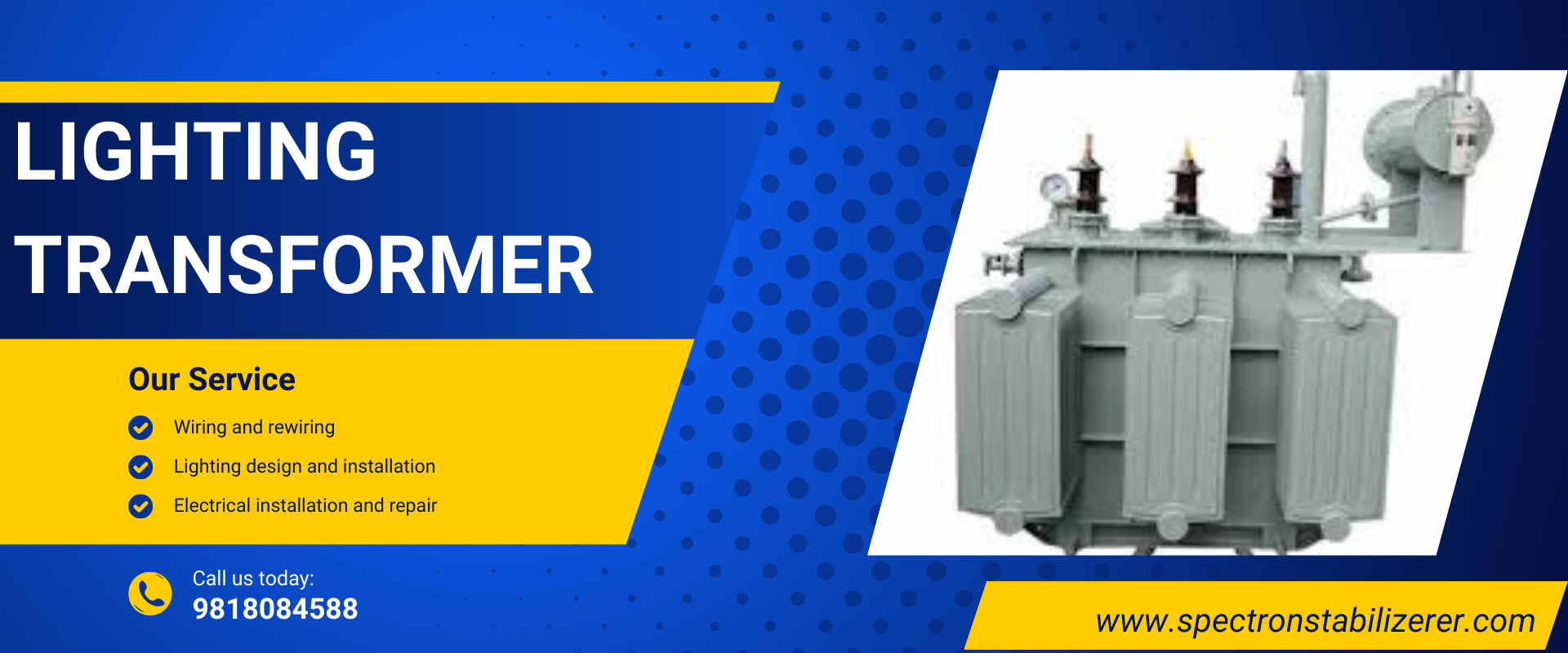
Lighting Transformers Manufacturer in Delhi, India: Everything You Need to Know for the Perfect Setup.
Outdoor lighting has the ability to totally change the appearance, security, and utility of your home, garden, business premises, or landscape. But most effective outdoor lighting systems utilize one very important element behind all these systems, and that is the lighting transformers. Here, in a full guide, we will clarify how outdoor lighting transformers are actually used, why they are necessary, and what to pick in order to get optimal performance in terms of long-lasting usage and safety.
What Are Outdoor Lighting Transformers?
Lighting transformers are used as electrical equipment to modify high-voltage power (in India, usually 230 V) into low voltage (12 V or 24 V) that can be used in outdoor lighting. The majority of the outdoor lights available, such as landscape lights, pathway lights, garden LED, and decorative lights, rely on low voltages to ensure that the lights are safe and to provide economic operation. A transformer ensures:
- Safe voltage conversion
- Stable power supply
- Long life of lighting fixtures
- Less chance of electrical hazard
Low-voltage outdoor lighting just cannot operate without a transformer.
What Is the Reason Lighting Transformers Are Important?
- Safety First – Moisture, rain, and dust are exposed to outdoor environments. Lighting transformers in low-voltage systems have a great effect on minimizing the danger of being shocked.
- Energy Efficiency – Transformers are used to maintain the flow of power as they are used to make sure that your lighting system only consumes as much power as it needs.
- Voltage Stability – The variation of power may destroy the LED drivers and fixtures. A quality transformer ensures that its voltage production remains constant so that it does not fail prematurely.
- System Expansion – Having the right pick of the transformer capacity, you may easily grow your lighting system in the future.
Outdoor Lighting Technologies Transformers
Various uses have different types of transformers. Here’s how they compare:
- Distribution Transformers – Distribution transformers are frequently applied in larger outdoor or business applications where the power is required to be reduced in voltage and then distributed further. They are ideal for:
- Large campuses
- Commercial landscapes
- Lighting installations in the industrial outdoor
- Isolation Transformers – These offer electrical isolation of the input circuit and output circuit. This safeguards electrical systems so that lighting systems are not prone to electrical noise, surges, and grounding problems. Benefits include:
- Enhanced safety
- Shock defense voltage immunity
- Less electrical interference
- Constant Voltage Transformers – Constant voltage transformers are geared in a manner that gives a constant output voltage despite the variation of the input voltage. They are ideal for:
- LED lighting systems
- Regions with a volatile power supply
- Long cable runs
- Special Purpose Transformers – Customized lighting special purpose transformers are designed to fit a certain project, which can include unique voltage ratings, heavy-duty applications, or architectural lighting. These are often used in:
- Smart lighting systems
- Ornamental building facades
- Outdoor event lighting
The Kick-Start Guide to Selecting the Appropriate Transformer for Outdoor Lighting
The performance and longevity are guaranteed by the selection of the appropriate transformer. Take into account the following aspects:
- Calculate Total Wattage – Add the total wattage of all the lights in your system, and then select a transformer that has a minimum of 20-25 percent additional capacity.
- Take Distance & Voltage Drop into Account – Long cable traces can lead to a voltage drop. Constant voltage or a higher-capacity transformer can assist in keeping the brightness constant.
- Weather Protection – Whenever installing a transformer outside the house, ensure that the enclosure of the transformer has a good IP rating.
- Future Expansion – Choose a slightly rated transformer in case you want to add some lights in the future.
- Voltage Stability Support – Also, when your location has many changes, a Spec tron Stabilizer can support your lighting equipment to ensure that you do not invest further, as it provides the system with consistent voltage.
Best Practices
To ensure a perfect setup:
- The transformer should be mounted in the air.
- Have it shielded against direct rainfall.
- Use proper gauge wiring.
- Overloading the transformer should be avoided.
- Strictly follow the manufacturer’s directions.
- Large-scale systems should be installed by a professional.
Common Problems & Solutions
ProblemPotential CauseSolutionFlashing lightsUse a constant voltage stabilizer or transformer only Use a constant voltage stabilizer or transformer onlyDark lightingReduces voltage drop Reduce cable length or increase the transformerOverheating transformersOverloading and requesting transformer capacity Check connections and fuse
Advantages of Investment in Lighting Transformer
- Accommodates a longer life of outdoor fixtures
- Reduced maintenance costs
- Improved light performance
- Improved electrical safety
- Enhanced aesthetic impact
It is not only a device of power, but a good transformer is the keystone of your total outdoor lighting system.
Final Thoughts
Outdoor lights have the ability to beautify and increase security and value to your property; however, they should be installed and turned on properly. The knowledge of the use of lighting transformers, such as distribution transformers, isolation transformers, and constant voltage transformers, as well as special-purpose transformers, assists you in constructing a safe and reliable system. The Spec tron Stabilizer, which provides the added control of the unstable power supply, is also appropriate in areas afflicted with power instability. The selection of the desirable transformer will not only make your outdoor lighting a sight to be seen, but also be technically good and durable.